What is EBM?
This module discusses the definition of Evidence Based Medicine or EBM, and the steps in practising EBM.
Skill 3: Applying the evidence
After acquiring the evidence and appraising directness, validity, and the results, the next skill we need to develop is applying the evidence to a particular clinical situation.
There are three specific skills that are required in applying the evidence in practice:
1. Assessing applicability: Can I use the evidence?
When we talk about applicability, we refer to the extent to which we can expect the conclusions of a study to hold true for the particular patients we see in our practice or context. For example, can we expect the patients that we see in our practice to benefit to a similar extent as the participants in the study? Several factors can affect our judgement of the extent that the study results can be applied or transferred to our patients. These can be divided into 2 categories: biologic and socioeconomic. Biologic issues include Sex, Co-morbidities, Race, Age, and Pathology. Socioeconomic issues include availability, accessibility, and affordability. The acronym SCRAPS can help us to remember these issues.
2. Individualizing the results: How will my patient be affected?
We need to remember that the results of a study represent the average effects of an intervention on large groups of people. However, as healthcare providers, we would like to provide our patients the closest estimate of the effects a particular intervention would have on him or her, and not patients like him or her. This requires that we consider our patient's individual characteristics when estimating the effect of an intervention on them. In other words, we need to be able to tailor the results of a study to our individual patients.
Individualizing the results requires that we first assess our patient's baseline risk for an outcome, that is, their risk BEFORE exposure to a health technology or harmful exposure. We can get this information from risk calculators (e.g. Framinghan CV risk calculator or HAD-BLED for bleeding risk), or estimate this from the baseline risk of the control group (i.e. the group that did not receive the study intervention) in the study. To estimate our patient's risk for an outcome after exposure to the health technology (post-exposure risk), we take the relative measure of effect (e.g. relative risk) from the study and multiply this with the baseline risk. To get a more reliable estimate of the individualized effect of the health technology on our patient, we calculate the patient's individualized absolute risk reduction by subtracting the their post-exposure risk from their baseline risk. From the individualized ARR, we can calculate our patient's individualized NNT, which represents the chances that they will get the effect of the health technology. (To review the concept of "risk," click on the "EBM concept: Understanding Risk" button below.)
3. Sharing the decision: What does my patient think?
Understanding the evidence, including the risks of benefit and the risks of harm is not easy to do especially for the lay. Neither is it easy to communicate the uncertainty around the evidence to our patients. However, we need to be able to present this information to our patients and help them understand the trade-offs between the potential benefits, harms, and costs of a health technology so that they can make a decision that is consistent with their values and preferences.
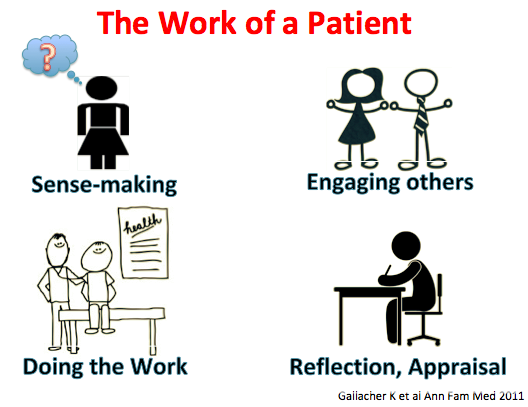
We need to remember that being a patient is not easy. It takes a lot of work--our patients are also spouses, parents, friends, siblings, etc. Their medical decisions may affect the other aspects of their lives and vice versa. It is therefore important that their values, preferences, and individual contexts are considered in decisions about their care. We can do this when we share the decision with our patients. We should lay down all the cards on the table, including all potential options even doing nothing, and work together with our patients to arrive at a shared decision about the next steps to take in their care. It is only in this way that we can truly ensure that our patients will receive the care that is best for them, and not just patients like them.