
Module 6: INTERCULTURAL COMMUNICATION
Section outline
-
transenter.com
-
Let’s Begin
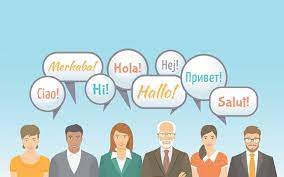
Verbal communication refers to the reception, storage, retrieval, manipulation, and generation of linguistic symbols. Communicative misunderstanding, which is defined as “a potential breakdown point in conversation, or at least a kind of communicative turbulence” by Mauranen (2006, p. 128), is usually perceived as a problem in verbal communication and more specifically, in the interpretation of what is said by one or the other party. According to Bremer (1996), a problem in communication arises when “the listener achieves an interpretation, which makes sense to him or her — but it wasn’t the one the speaker meant” (Bremer, 1996, p. 40). This mismatch between the speaker’s meaning and the hearer’s interpretation is attributed by Hua (2014) to two factors: inadequate linguistic proficiency and pragmatic mismatch which results in pragmatic failure.
Read
1. https://www.wellspanphilhaven.org/Portals/0/Docs/Nonverbal%20Communication.pdf
2. Communication styles. (n.d.). From
https://moniviestin.jyu.fi/ohjelmat/hum/viesti/en/ics/20
Think
1. What is individualism and/or collectivism? What is the difference between individualism and
collectivism?
2. What are self-construals? What are examples of self-construals?
3. How does individualism-collectivism impact on behavior?
4. What did the authors hypothesize and find out about the relationship between individualism-
collectivism, self-construals, and communication styles?
5. What practical applications might these results have for cultural groups who are not mentioned in
the study?
-
Let’s begin
Although language is an effective and efficient means of communicating explicit messages, a full appreciation of the communication process especially in intercultural interactions requires consideration of nonverbal communication behavior. Nonverbal behaviors include all actions that take place during communication that do not use words, such as facial expressions, eye gaze, posture, use of space, and even tone of voice.
Watch/Read
1. Ekman, P., & Friesen, W. V. (1969). The repertoire of nonverbal behavior: Categories, origins, usage, and coding. Semiotica, 1(1), pp. 49 – 98.
From https://1ammce38pkj41n8xkp1iocwe-wpengine.netdna-ssl.com/wp- content/uploads/2013/07/The-Repertoire-Of-Nonverbal-Behavior-Categories- Origins-.pdf
2. Hall, E. T. (1982). The hidden dimension. Anchor Books.
From http://index- of.es/z0ro-Repository-2/Cyber/03%20- %20General%20Science/The%20Hidden%20Dimension%20- %20Edward%20Hall.pdf
3. Hall, E. T. (1959). The silent language.
From https://monoskop.org/images/5/57/Hall_Edward_T_The_Silent_Language.pdf
Think
1. What did Ekman and Friesen say about the usage and origin of nonverbal behavior? How did they elaborate on the cultural origins of nonverbal behavior?
2. How did they categorize nonverbal behavior?
3. What did Hall say about space? How does space take on different meanings across cultures?
4. How does space impact on the other categories or forms of nonverbal behaviors? In Hall’s treatise, it appears that space is the thread that shapes and links the other nonverbal behaviors. What is your stand on his proposition?
5. Ekman et al. and Hall wrote their treatise on nonverbal behavior and their communicative implications in the 1960s. Society has changed since then. Given the fact that culture is dynamic, do you think that their conceptualizations of nonverbal communication is still an adequate framework of analysis in the present time? Why do you say so? If no, which part needs to be re-examined today?
-
Let’s begin
Aside from the clashes of meanings brought about by different cultural frameworks, there are bigger issues in intercultural communication that stem from a lack of understanding of other cultures. These include anxiety, ethnocentrism, stereotypes, prejudice, and discrimination. We consider these to be bigger issues as they do no only stem from and result in misunderstood meanings; rather they impact negatively on relationships between cultures and, at their worst, may be the source of intercultural conflicts with serious socio-political consequences.
Watch/Read
1. Sorrels, K. (2016). Intercultural communication globalization and social justice (Second edition). Sage.
From https://canvas.umn.edu/courses/137772/files/8254102/download?download_ frd= 1
2. SpringboardSchools. (2008, July 14). The lunch date [Video]. YouTube.
From https://www.youtube.com/watch?v=epuTZigxUY8&t=5s
Think
Link 1:
1. Sorrells proposes a re-imagination of intercultural communication in the age of globalization. How is it a re-imagination and why is it necessary to propose it?
2. What did she say about intercultural praxis? What are the important considerations in intercultural praxis?
Link 2:
1. What does the short film suggest the older White woman had been taught about Black American men? And what does the short film suggest the Black American man had been taught about White Americans?
2. What assumptions did the white woman make about the Black American in the diner? What assumptions did the Black American make about the woman? What actions did each of them take based on their assumptions about each other? How did the characters’ assumptions about each other affect their ability to communicate their internal states?
3. Consider the man behind the counter who watched the event unfold. What do you think does he stand for in that example of a cultural clash that is reflective of the bigger cultural collisions in our society?
4. What barriers in intercultural communication are evident in the interaction between the two characters in the short film?
5. Choose one of the two main characters and propose how Sorrells’ framework for intercultural praxis can be applied to improve the character's communicative encounter.
-
Opened: Sunday, 24 November 2024, 12:00 AMDue: Thursday, 28 November 2024, 11:59 PM
Assignment Guide for the Multimodal Presentation
Procedure
- This group output is to assess your creative ability to weave the knowledge that you have gained from Modules 5 and 6 through a multimodal presentation, e.g., a video presentation of insights you have gained after studying basic concepts on culture and communication, and their application.To review what a multimodal presentation is, watch this video: Multimodality or search the YouTube for videos on how to create multimodal compositions or presentations.
2. The video should be at the maximum 15 minutes long. The group members should be in the video. PowerPoint presentations may be incorporated in the multimodal presentations provided that these PowerPoint presentations are accompanied by explanatory voice-overs. The multimodal outputs would have to be saved as a video file.
3. Save your work and submit it to me via the Googl Drive folder. Use the file name
MULTIMODAL PRESENTATION Group ____ (surnames, first names of the members of the group).
4. The work should be submitted on or before 28 November 2024 and should be ready for presentation on 28 November and 02 December 2024, depending on the schedule for each group.
Evaluation Criteria
CRITERIA
1 POINT
3 POINTS
5 POINTS
YOUR SCORE
Organization
There is no clear plan of staging ideas, i.e., a meaningful sequencing of ideas expressed in the multimodal elements (ME), e.g., photos, videos, graphics, sounds, which contribute to the clear expression of the composition’s overall meaning.
A plan of staging ideas can be sensed but it does not prepare the viewer for the receiving the main content of the composition.
There is a clear plan of staging ideas, which contribute to the effective delivery of the composition’s message.
Conciseness and Coherence
There are MEs that prevent a clear delivery of the multimodal composition’s overall meaning.
A few of the MEs, do not contribute to the overall meaning of the multimodal composition.
Each of the MEs serves a clear purpose to deliver the composition’s overall meaning.
Grammar and style
There are many unacceptable verbal-text constructions.
There are a few unacceptable verbal-text constructions.
The verbal texts are free of grammatical inconsistencies.
Appropriateness
There are MEs that are not appropriate to the genre (e.g., a report, a vlog, presentation) and/or audience (professor and classmates).
Some MEs are not appropriate to the genre and/or audience.
Most of the MEs are appropriate to both genre and audience.
Content and logic
Most of the arguments are not supported by sound premises. Most of the claims are irrelevant, information are inaccurate, and credible sources are lacking.
A few of the arguments are not well-supported by sound premises.
Some of the claims are irrelevant, information are slightly inaccurate, and a few credible sources are provided.
All the arguments are well-supported by sound premises.
The composition exhibits a high degree of accuracy and credibility and is of high relevance to the question at hand.
TOTAL
/25
-